
How Non-GMO Poultry Feed Supports Healthier Backyard Chickens
More families are keeping a small flock in the backyard, and for good reason. Fresh eggs, friendly birds, and a little more control over your food all make it worthwhile. But keeping chickens healthy starts with one simple thing: what goes in the feeder.
That is where non-GMO poultry feed comes in. Clean, honest feed gives your birds the nutrition they need without the extra ingredients many keepers would rather avoid. In this guide, we will look at what non-GMO feed is, how it supports healthier backyard chickens, and how to match the right feed to your flock. If you want strong birds and steady eggs, it all begins with good feed.
What Is Non-GMO Poultry Feed?
Non-GMO poultry feed is feed made without genetically modified ingredients. Most standard chicken feed is built around corn and soybean meal, and much of that corn and soy is genetically modified. Non-GMO feed uses grains that have not been genetically engineered, so you know more about exactly what your birds are eating.
The idea is simple. When you raise your own chickens, you want clean, honest nutrition you can trust. Non-GMO chicken feed skips the guesswork and focuses on quality grains and straightforward ingredients. Many keepers choose it for the same reason they started a backyard flock in the first place, which is more control over their food and their animals.
It is worth clearing up one point. Non-GMO is not the same as certified organic. Organic feed follows a strict set of farming rules, while non-GMO feed simply avoids genetically modified ingredients and is often checked by a third party such as the Non-GMO Project. Both offer cleaner nutrition than typical commodity feed, and both are a solid step up for a home flock.
Why What You Feed Matters So Much
Chickens rely on you to provide balanced nutrition. Good backyard chicken nutrition covers protein for growth and eggs, energy for daily activity, and the vitamins and minerals that keep birds healthy. When any of these fall short, you see it in the flock. Egg production drops, feathers look rough, and birds get sluggish.
A balanced prepared feed is the backbone of a healthy flock. University of Minnesota Extension notes that chickens should be fed a complete feed balanced for vitamins, minerals, and protein, along with fresh water at all times. Kitchen scraps and treats are fine in small amounts, but they cannot replace a proper feed.
Choosing natural poultry feed takes this a step further. Cleaner ingredients and fresher grains give your birds better fuel to work with. Healthy birds start with what is in the bag, and that is where your choices really count.
How Non-GMO Feed Supports Healthier Chickens
So how does clean feed actually help your flock? The benefits show up in a few clear ways.
-
Cleaner nutrition you can trust. Non-GMO feed is made without genetically modified grains, so there is less mystery about what your chickens eat every day.
-
Better feather and skin health. Many keepers notice fuller feathering and brighter coloring on birds raised with quality feed.
-
Steady energy and activity. Balanced, wholesome grains help keep birds active, alert, and foraging the way healthy chickens should.
-
Support for strong egg production. Good protein and nutrients give laying hens the building blocks they need for consistent eggs.
-
Peace of mind. When you raise your own flock, feeding clean, honest feed simply feels right.
None of these depend on fancy marketing. They come from a basic truth: better inputs tend to produce healthier birds. Feed your chickens well and they show it.
Matching Feed to Your Flock's Life Stage
Chickens need different feed at different ages, and giving the right one at the right time is a big part of raising healthy backyard chickens. The eXtension poultry team explains that feeds are formulated for specific ages and production stages, so it helps to know the basics.
Baby chicks start on a starter feed from hatch until about six weeks of age. Non-GMO chick feed is higher in protein, usually around 18 to 20 percent, to fuel fast early growth. This is the most important window for building strong, healthy birds.
From about seven to seventeen weeks, growing birds move to a grower feed with slightly less protein as they mature. Then, once hens begin laying around eighteen to twenty weeks, they switch to a layer feed. Non-GMO layer feed contains about 16 to 18 percent protein plus extra calcium, which laying hens need to form strong eggshells. Feeding a layer ration too early or too late can throw off both health and egg quality, so timing matters.
If you keep a mixed flock of different ages and types, an all flock feed can make life simpler by covering birds that are not all on the same schedule.
Non-GMO Feed and Better Eggs
For many keepers, eggs are the whole point, and feed plays a direct role in what lands in the nest box. Poultry feed for egg production needs enough protein to build egg whites and enough calcium to build strong shells. Without those, hens lay less, or lay eggs with thin, easily cracked shells.
A quality non-GMO layer feed provides that steady base. Many keepers also offer crushed oyster shell free choice, which gives hens extra calcium when they need it for shell strength. If your eggshells seem thin, that extra calcium is often the fix.
Clean feed can also make a difference you can see and taste. Well-fed hens on fresh, natural poultry feed tend to lay consistently, with firm shells and rich yolks. It is one more reason keepers feel good about choosing non-GMO.
Simple Feeding Tips for a Healthy Flock
Good feed works best alongside good habits. A few basics go a long way.
Keep clean, fresh water available at all times, since chickens drink often and need it to lay well. Offer complete feed free choice so birds can eat when they need to. Go easy on treats and scratch grains, since these are low in protein and can crowd out better nutrition if overfed.
A good rule is to keep treats to about a tenth of the total diet, offered in the afternoon after birds have eaten their feed. Provide grit to help digestion and oyster shell for laying hens. Finally, expect your flock to eat a little more in cold weather and a little less in summer heat, which is normal.
The Blue Ribbon Approach
At Blue Ribbon Non-GMO Feeds, the goal is simple: real feed, real farmers, real results. Every bag is Non-GMO Project Verified and milled fresh in Pennsylvania, then shipped straight from the mill to your coop with no middlemen in between. The company believes healthy flocks start with straightforward nutrition, nothing more and nothing less.
Frequently Asked Questions
What feed should I give baby chicks?
Baby chicks need a higher-protein starter feed from day one until about six weeks of age. The Blue Ribbon Non-GMO Chick Starter Crumbles is made for this stage, with a clean, non-GMO formula and a crumble texture that is easy for tiny beaks to pick up.
What is the best feed for laying hens?
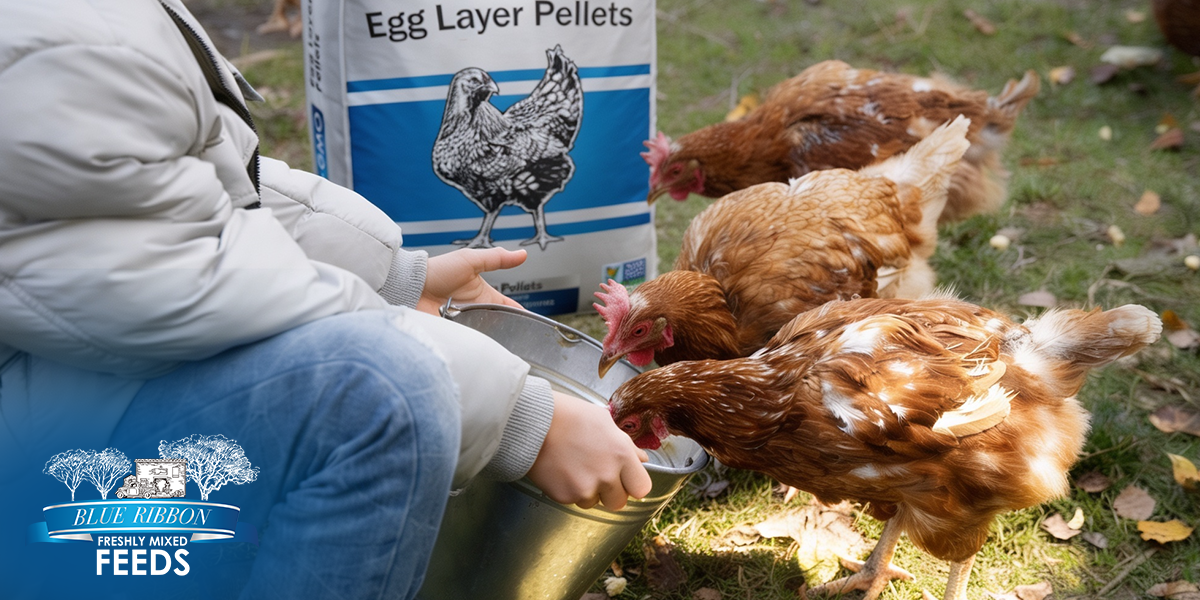
Once hens start laying around eighteen to twenty weeks, they need a layer feed with added calcium for strong shells. The Blue Ribbon Non-GMO Egg Layer Pellets is built to support steady egg production with clean, non-GMO nutrition.
I have chickens of different ages. Is there one feed I can use?
Yes. The Blue Ribbon Non-GMO All Flock Crumbles is a flexible option for mixed flocks with birds of different ages and types. Just offer oyster shell on the side so your laying hens get the extra calcium they need.
Can I give my chickens treats or scratch grains?
In moderation, yes. The Blue Ribbon Poultry Scratch Grains makes a nice treat, but scratch is low in protein and should stay a small part of the diet. Feed it in the afternoon after birds have had their complete feed.
Do you carry feed for other animals besides chickens?
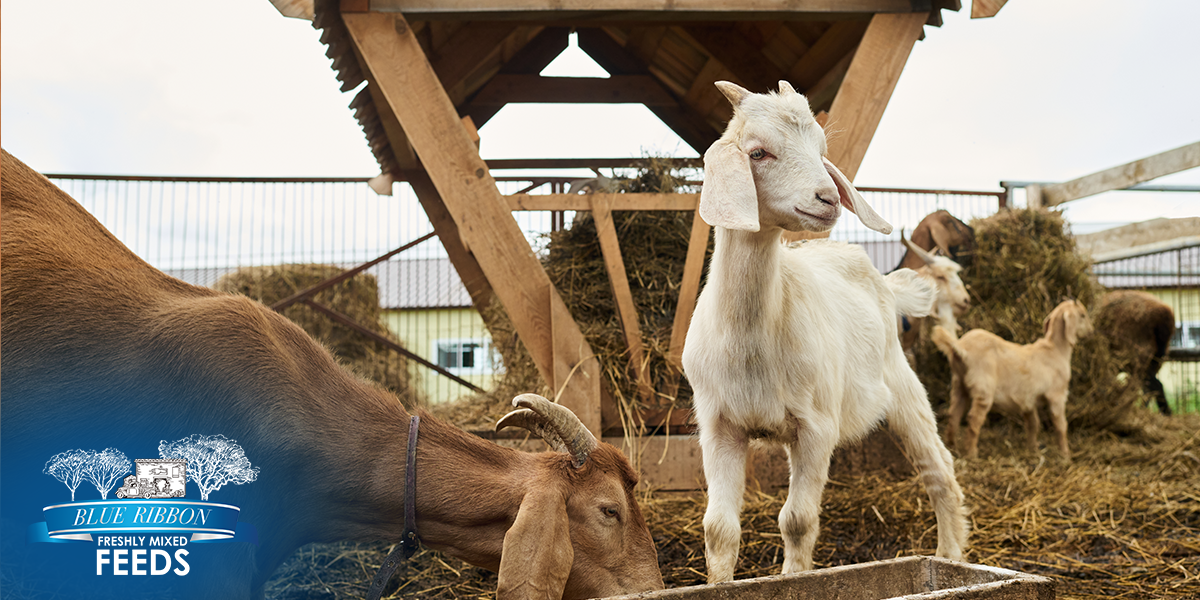
Yes. Along with poultry feeds, Blue Ribbon offers the Non-GMO All Stock Pellets, a versatile option for keepers who raise more than just chickens. You can browse the full lineup on the Blue Ribbon shop page.
Is non-GMO feed worth the cost?
Many keepers think so. Blue Ribbon is built on the idea that clean nutrition should not cost a bale and a half. Every bag is Non-GMO Project Verified and milled fresh in the USA, so you get honest feed at a fair price.
Final Thoughts
Healthy backyard chickens start with what you put in the feeder. Non-GMO poultry feed gives your birds clean, honest nutrition that supports strong growth, steady eggs, and a flock you can feel good about. Match the feed to your birds' age, keep fresh water and a few simple habits in place, and your chickens will do the rest.
If you are ready to give your flock a clean, dependable start, Blue Ribbon Non-GMO Feeds delivers fresh, American-made nutrition at a fair price. Real feed, real farmers, real results. That is what your backyard flock deserves.

Leave a comment
What do you want to hear about next? We'd love to hear from you!